
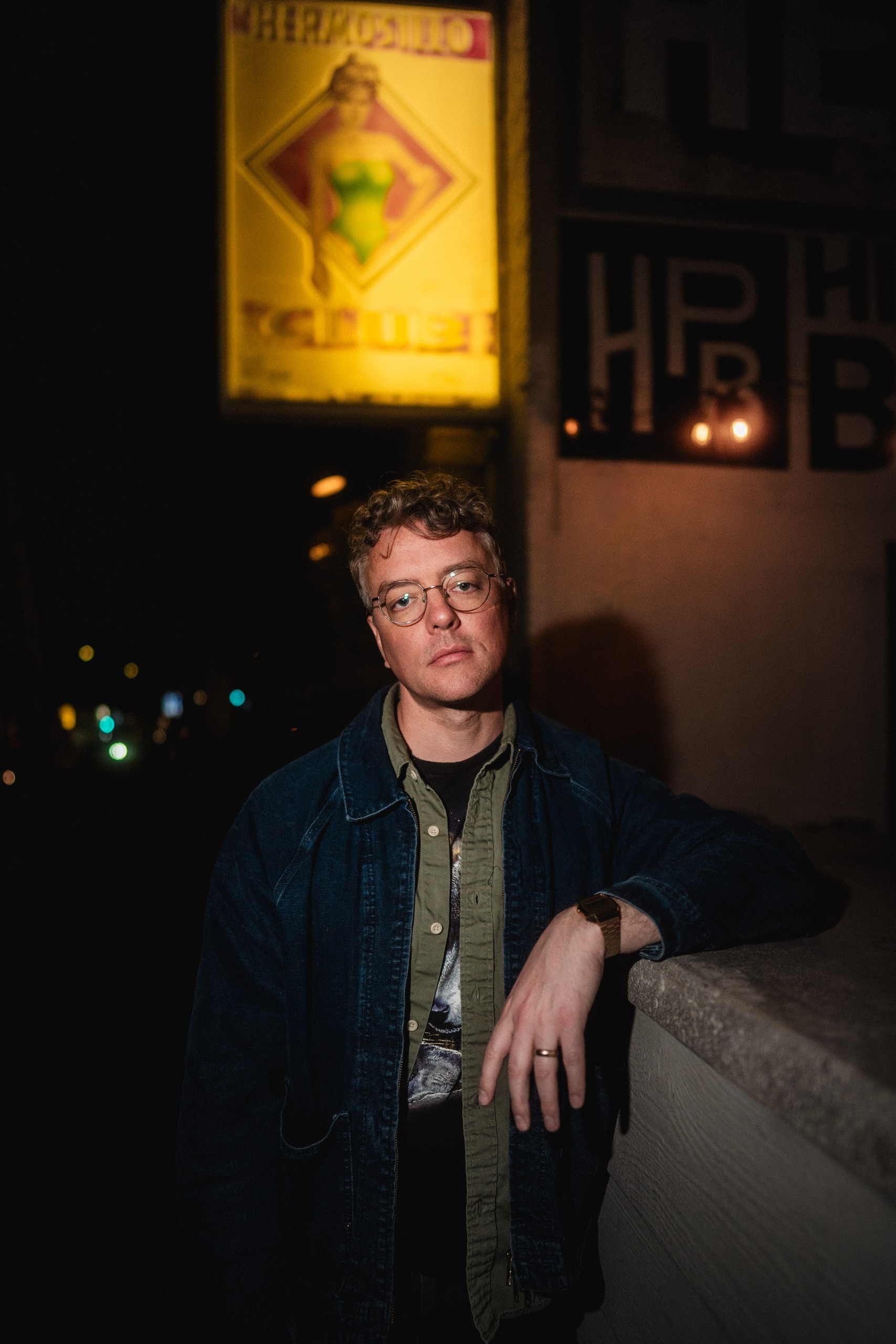
Featured image: Andrew Pelletier. Photo by Patrick Ginn.
“I’d love to say that I hear a sound in my head, then pick up the instrument, hit record and boom, there’s the sound. But alas, it’s trial and error,” Andrew Pelletier said.
For Pelletier, making a Fur Trader song can mean trying one sound after another before he knows whether an idea will work. In an email interview with Scapi, he described how that search changes when another musician is there to make choices with him.
“I DO hear sounds but typically when I TRY those sounds they don’t work, so I pick up another sound, then another sound, and by round 4 or 5 I usually know if what I’m doing is the thing or not the thing,” he said.
Working with other people can shorten the chase. “We usually try something quickly and if it works we keep moving and if it doesn’t we try something else and that’s usually the keeper,” he said.
He connects that pace to the exchange between people. “It must be the beauty and nature of human to human interaction- being able to find something together and keep one another in check (or not in check),” he said.
Alone, finding the arrangement does not necessarily end the search. Pelletier said he can keep changing the sounds through effects, tape, production and mixing until the song is finished.
When producing for somebody else, he starts by asking what that artist wants to hear. “I typically ask the artist what their vision is for instrumentation; I always lead with their ideas first. And then we try it out,” he said.
Most of the artists he works with play guitar or piano and sing, Pelletier said. He may add piano, bass, guitar or synthesizer parts, then return to the artist’s judgment about what belongs.
“Then I take the artist’s guidance on which parts or instruments are working, what to focus on, what to mute. Most projects are a blend of both our ideas,” he said.
The amount he contributes changes with the project. He described sessions with a singer who had no strong instrumental plan and was happy for him to build the song, an arrangement he said was fine too.
Those sessions also make him notice advice he finds harder to follow alone. With students and other artists, he emphasizes performance, emotion and capturing a take before chasing a particular sound or vision.
“I tend not to do that in my own work; I’m always so exhausted by myself and the recording process that I just want to move forward. So I end up having to re-record a lot,” he said.
In his own recordings, he may clean up or mix parts as he records to carve out the song. With other people, he is more comfortable gathering ideas and good takes before deciding how everything fits, the music can stay unsettled longer because there is somebody else helping him hear it.
“And then we can figure it out later. I like that. But it’s challenging for me to do that when I’m just by myself working on my songs,” he said.
The difference keeps returning him to the same part of the process: “Again, the human to human interface is important and often more constructive!”
Find Andrew Pelletier’s work at andrewpelletier.com.

Be First to Comment