
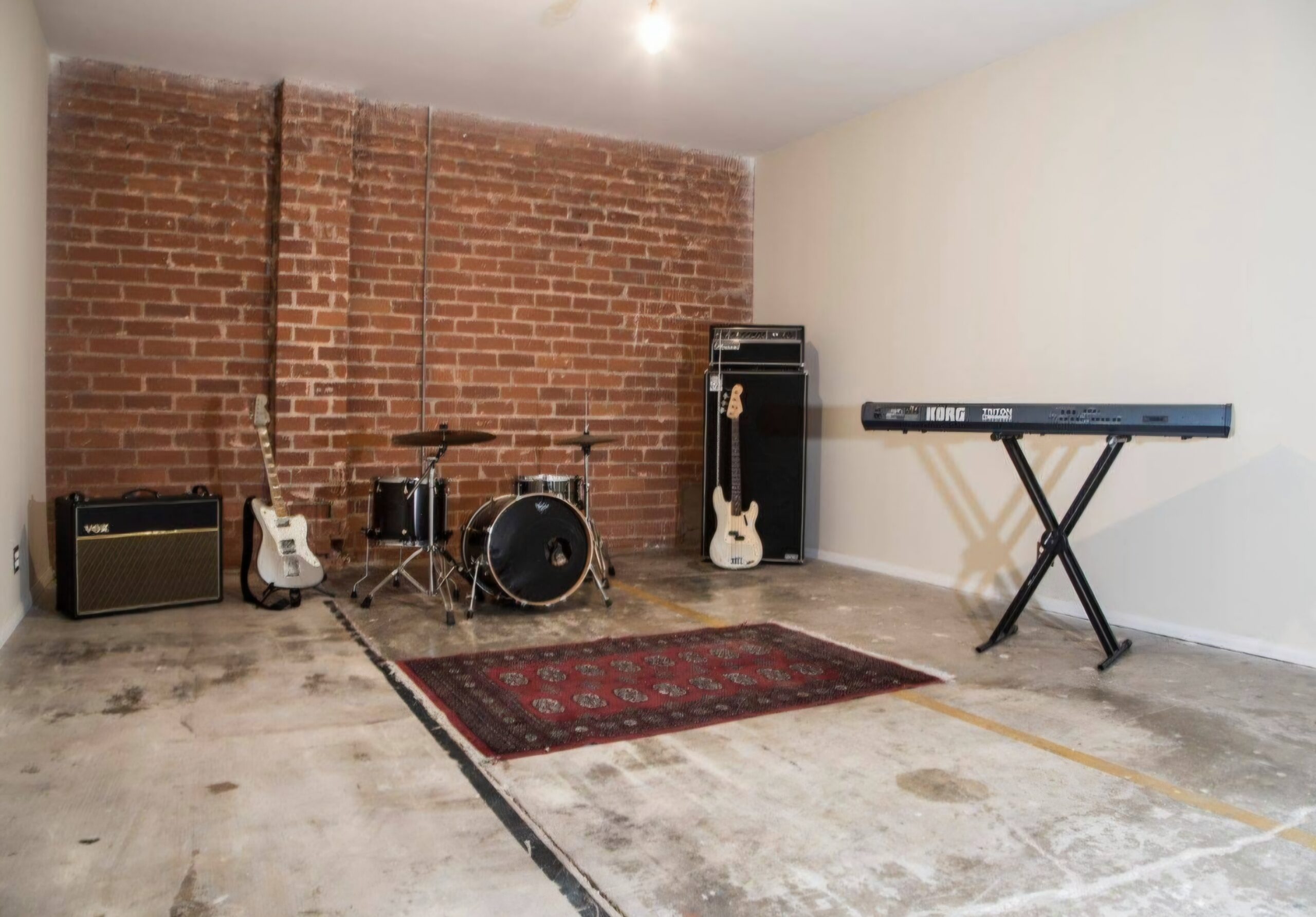
A rehearsal room at Black Diamond Studios. Photo courtesy of Black Diamond Studios; photographer unknown.
Leaving instruments and equipment in place changes the next rehearsal before anyone plays, in Pete’s account of Black Diamond Studios. A band can return to the setup it left behind and resume its work.
“One of the biggest advantages of a private lockout studio is that bands no longer have to work around someone else’s schedule,” Pete said. “They can leave their instruments, equipment, and entire setup in place and pick up right where they left off.”
He describes that continuity as useful for bands preparing for a tour or recording project, as well as those developing new material. The room’s purpose extends beyond keeping equipment in one place to letting musicians decide when to use it.
“With 24-hour access, rehearsals can happen whenever inspiration strikes, whether that’s early in the morning or late into the night,” he said.
Control over that time also involves deciding when to be around other people. Pete describes the private rooms as dedicated spaces for focused work, with the players’ lounge and shared areas offering somewhere to step out of it.
“Our players’ lounge and shared areas provide a place to take a break, meet other musicians, exchange ideas, and build connections organically,” he said.
The distinction depends on musicians being able to choose whether to take part. “We want people to have the opportunity to interact, but never feel obligated to socialize,” Pete said.
Keeping that choice useful over time brings the account back to how the building is maintained. He says musicians who stay for years have helped shape his understanding of what a rehearsal space needs to provide.
“We’ve learned that the little things matter: dependable 24-hour access, well-maintained facilities, respect for everyone’s space, and a professional atmosphere,” he said.
Those are the conditions Pete identifies behind the ability to return and get back to work. The standing setup depends on a building musicians can continue to count on when the next rehearsal comes around.
“We want people to stay because they love their space and the environment around it,” he said. His account of that environment starts with a practical freedom: leaving the room without having to give up the next rehearsal’s starting point.

Be First to Comment