
A mock-up of a gold insurance card with Donald Trump’s name on it has become Abdul El-Sayed’s invitation to negotiate over universal health coverage. Trump reposted the Michigan Democratic senator-elect’s image without adding a comment, NBC News reported.
On Meet the Press on November 22, El-Sayed said meeting plans involving Trump or Vice President JD Vance were being developed. He sought guaranteed lifetime coverage without premiums, copays or deductibles; the interview established neither a completed meeting nor an agreed plan.
Asked whether he supported Bernie Sanders’ Medicare for All bill, El-Sayed answered, “I support his bill.” He explained his preferred public guarantee through a school analogy: families could choose private schools while retaining access to public ones.
Host Kristen Welker pressed him on how private insurance would fit. El-Sayed emphasized the public guarantee and left its relationship to existing private plans unresolved- a consequential detail for anyone trying to understand what would happen to their coverage.
Sanders’ S. 1506, introduced April 29, 2025, offers a specific comparison. Its introduced text sets out a national insurance program rather than simply adding another plan to shop for.
Section 107 would prohibit private insurers from selling coverage duplicating the public program’s benefits once its main benefits begin. Employers would also be barred from providing duplicative benefits, while insurance covering additional benefits outside the program would remain permitted.
That distinction matters: the bill would sharply change private insurance’s role without prohibiting every possible private policy. Preserving competing private coverage for the same benefits would require a different rule.
The public package would include hospital care, prescription drugs and mental health treatment, alongside dental, vision and gender-affirming care. Section 202 generally prohibits patient cost-sharing, but allows a limited prescription-drug exception with income protections.
Timing is another policy choice: the introduced bill phases in its main benefits in the fourth calendar year after enactment, with earlier coverage for children. None of those proposed benefits follows automatically from a presidential repost.
The employment question also helps explain why unions are part of this debate. At the bill’s April 2025 introduction, UAW President Shawn Fain described health coverage as a recurring bargaining struggle, and National Nurses United President Nancy Hagans connected the legislation to patients’ difficulty affording care.
Those were arguments from supporters, with a concrete concern: workers negotiate over access to treatment as well as wages. A universal guarantee would have to specify how coverage continues when someone’s job changes.
Costs depend on the design, too. In a 2020 analysis of illustrative single-payer systems, the Congressional Budget Office found that provider payments, patient cost-sharing and long-term-care coverage substantially affected projected spending.
CBO projected higher federal subsidies for health care across its examples, while total national health spending could rise or fall. Those examples weren’t an estimate of El-Sayed’s pitch, but they show why moving bills onto a public budget and changing the country’s total medical costs are separate questions.
A workable agreement would need to answer which benefits everyone receives, how they’re financed and whether private plans can duplicate them. The branding has an audience; the insurance rules will determine what people can actually use.
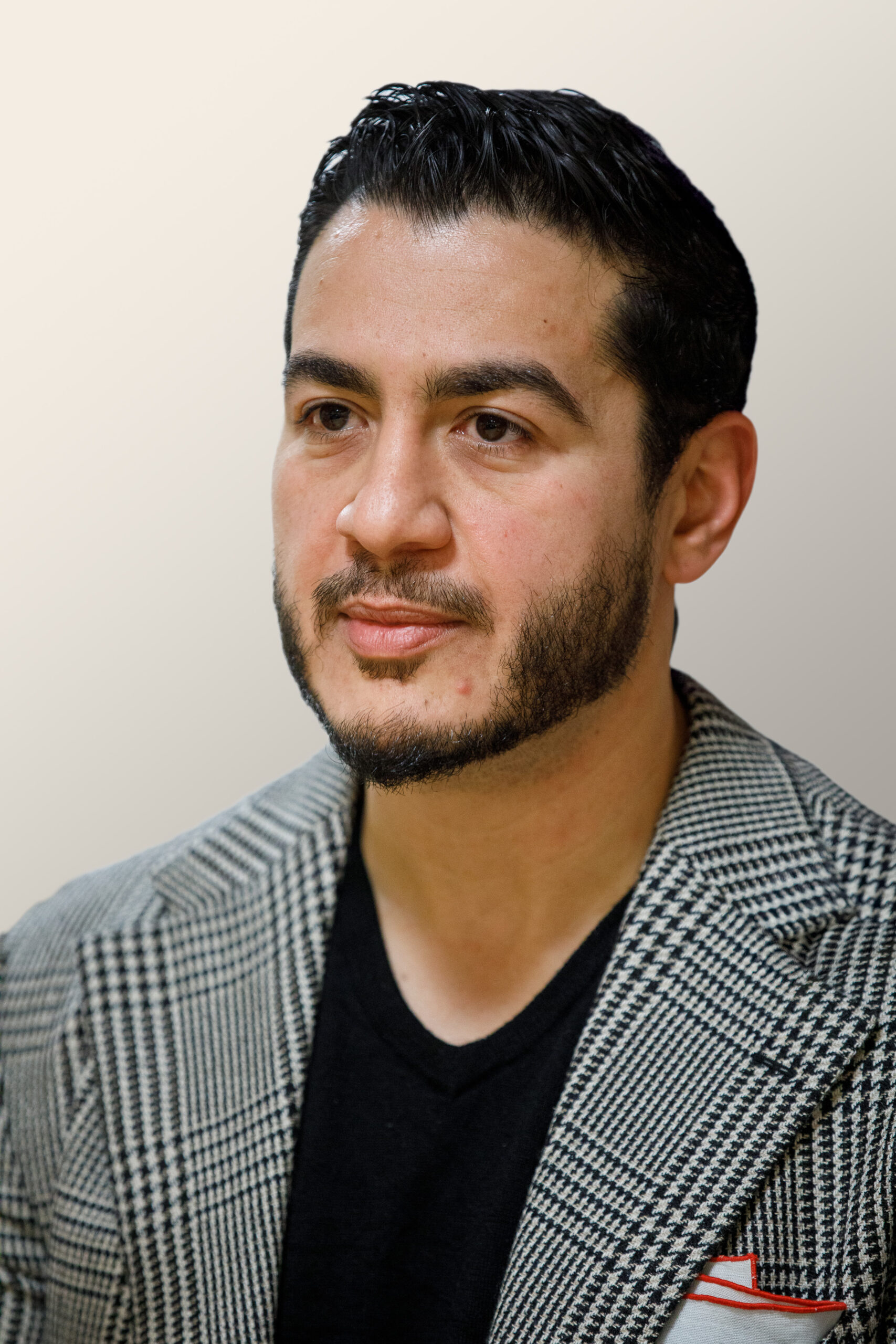
Abdul El-Sayed, photographed February 3, 2025. Archival portrait; it does not depict the November 22, 2026 interview. Photo: Kenneth C. Zirkel, CC BY-SA 4.0.


Be First to Comment