
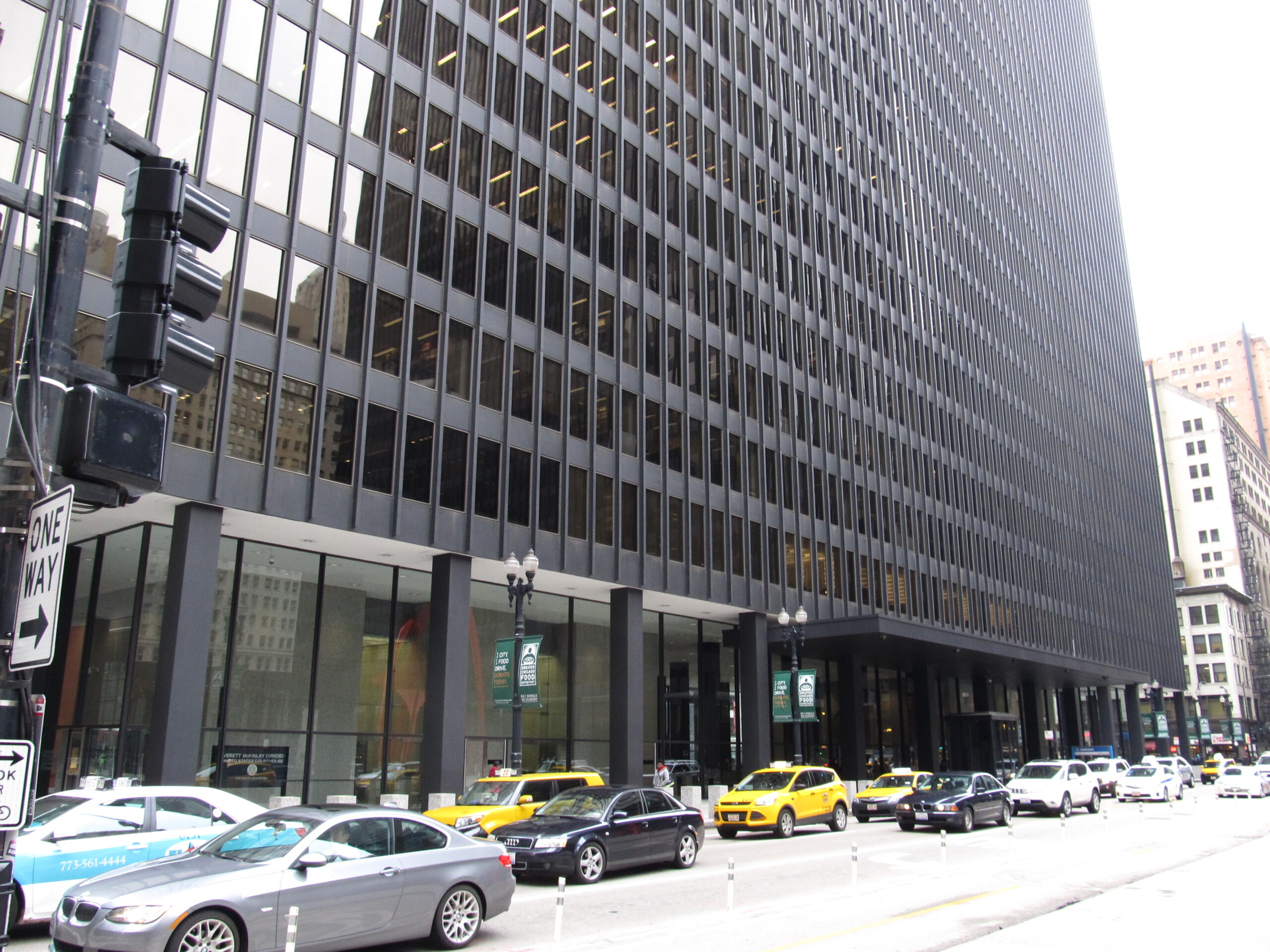
Featured image: The Everett McKinley Dirksen U.S. Courthouse in Chicago, photographed on November 22, 2013. Archival photo. Photo: Ken Lund, Dirksen United States Courthouse, Chicago Loop, Chicago, Illinois (CC BY-SA 2.0).
Updated November 17, 2026.
U.S. District Judge April Perry on November 16 denied the Justice Department’s request to limit testimony about the failed Broadview Six prosecution. Her minute order sets a process for any remaining privilege disputes.
If the parties remain at an impasse after meeting and conferring about proposed testimony, the affected intervening prosecutor is to send the disputed portion and an explanation of why a privilege should not apply privately to the court by November 20. Government counsel must be copied.
The Justice Department’s response explaining why a privilege should apply is due November 25, with the affected prosecutor copied. The order does not decide every potential privilege claim.
WTTW reported November 16 that U.S. Attorney Andrew Boutros and assistant prosecutors William Hogan, Matthew Skiba and Andres Almendarez are scheduled to testify December 2.
A separate confidentiality order protects designated materials shared with lawyers for three assistant prosecutors. Those lawyers cannot disclose the materials to anyone, including their clients, without the government’s written consent; that restriction does not excuse testimony.
The charges grew out of a September 2025 protest outside the immigration detention facility in suburban Broadview during Operation Midway Blitz. Prosecutors initially accused six people of conspiring to obstruct a federal officer, bringing a felony case against demonstrators opposing the immigration crackdown.
As WBEZ reported when the remaining charges were dropped May 21, the defendants included former congressional candidate Kat Abughazaleh, Oak Park trustee Brian Straw, 45th Ward Democratic committeeperson Michael Rabbitt and campaign worker Andre Martin. Two other defendants’ charges had been dropped earlier.
The criminal case ended, but questions about the government’s conduct continued. Perry’s November 2 order sought testimony about grand jury transcripts, their redactions and the accuracy of prosecutors’ statements about communications with officials outside the Chicago U.S. attorney’s office.
Perry questioned the government’s account of those communications and Boutros’ explanation of when he learned about improper conduct before the grand jury. She concluded there was sufficient basis to investigate whether statements to the court were knowingly false.
A separate lawsuit filed November 2 adds another account of the pressure surrounding the prosecution. Douglas DePodesta, who led the FBI’s Chicago field office, alleges Boutros blamed him for the case’s collapse to protect his own reputation.
DePodesta says FBI leaders forced him to resign in July after Boutros accused him of conspiring with his sister-in-law, defense attorney Nancy DePodesta, to undermine the case. She represented Rabbitt; Douglas DePodesta denies discussing the investigation with her or participating in the alleged misconduct.
The complaint also alleges that Boutros pressed for investigations of people opposing the Trump administration without an adequate factual basis. DePodesta says he pushed back by requesting evidence that would justify opening those investigations.
The Chicago Tribune report published by the Daily Herald describes another allegation: DePodesta says Boutros discussed the Broadview investigation with senior Washington officials at an October 7, 2025, meeting. That account bears directly on the dispute over outside involvement in the charging process.
The Associated Press reported November 2 that Boutros’ office declined to comment, while the FBI and Justice Department did not immediately respond to its requests. DePodesta’s claims remain allegations in a civil lawsuit.
Perry’s inquiry seeks evidence and sworn answers; it does not decide criminal liability.