
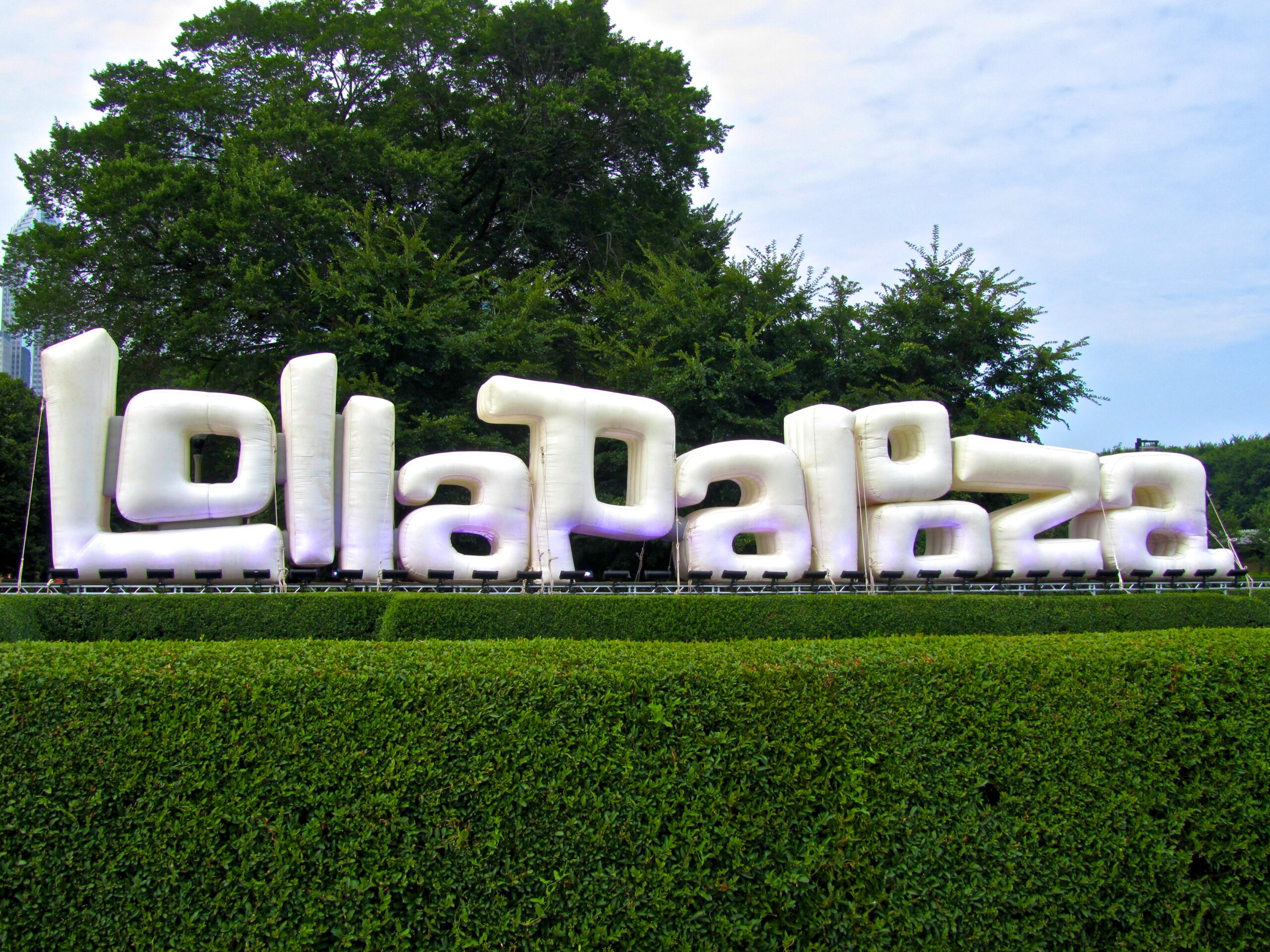
Featured image: An entrance sign for Lollapalooza in Chicago's Grant Park on August 5, 2011. Archival photo. Image by www.traveljunction.com, Entrance to Lollapalooza, Grant Park, Chicago, IL, KW (CC BY-SA 2.0).
A festival ticket gets someone through a gate, but the land around that gate belongs to a much bigger argument. Chicago’s November 3 ballot asks voters whether large festivals should have a permanent home, and that raises a second question: who would control it?
The citywide question is advisory. As NBC Chicago’s ballot guide explains, voters are being asked whether Chicago should develop a permanent festival space in place of using Grant Park and Douglass Park.
A favorable vote would express support for that direction. It would still leave the city to make decisions about a location, construction, funding and the rules for operating the space.
Those details matter to anyone picturing a better festival experience, and to neighbors who would live with the result after the last act leaves. A purpose-built site could become a public resource, but the words “permanent festival space” don’t settle what the public would be allowed to do there.
In Courtney Kueppers’ October 27 reporting for WBEZ, 11th Ward Ald. Nicole Lee’s proposal had no specified site. The measure also left open whether the city would operate the venue itself or contract that work out.
WBEZ spoke with Sara Heymann of Únete La Villita, whose organizing has challenged Riot Fest’s use of Douglass Park. Heymann supported the referendum while calling for neighborhood participation in whatever follows; the group had not helped put the question on the ballot.
She also wanted an accessible site near public transportation. Those concerns connect the festival grounds to the rest of the city: the route to a show, the conditions underfoot and the people whose neighborhood becomes the destination.
Chicago already has different models to examine. WBEZ noted the city-operated pavilion in Millennium Park and the publicly owned Huntington Bank Pavilion on Northerly Island, whose operation is contracted to Live Nation.
Any proposal should spell out the operator’s obligations before officials sign an agreement.
The same scrutiny belongs to the calendar around the biggest events. If a site is presented as a public cultural resource, the plan should explain what happens there on ordinary days and who gets to propose uses beyond the major festivals.
For Lollapalooza and Riot Fest audiences, the referendum offers an opening to discuss the places where music happens. For nearby residents, it offers an opening to ask how much say they will have over those places.
As Chicago votes, no new festival site has been selected by this question. The next useful document would put the public’s role into terms that can be read and challenged: who runs the grounds, who can use them and how those decisions can change.


Be First to Comment