
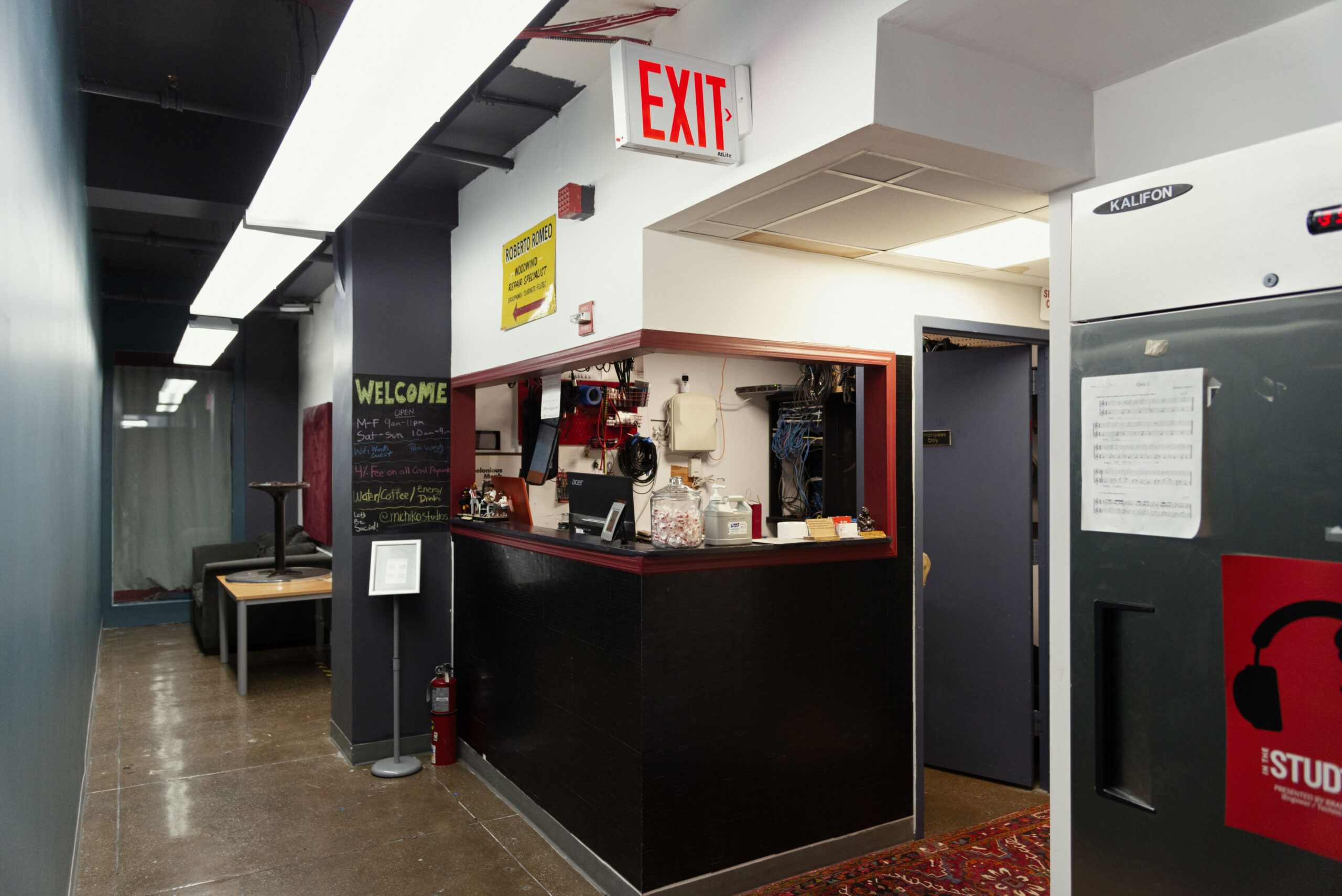
The front desk at Michiko Studios. Photograph by Ricardo Chávez.
A pianist can book a room and still find that the instrument isn’t comfortable to practice on. At Michiko Studios in Manhattan, studio manager Jackson Hillmer described what the front desk does next.
“If a customer can’t comfortably practice on the available piano they booked, our staff will review studio availability and provide an equally valued piano to accommodate them,” Hillmer wrote in an email interview.
Hillmer pointed to a quick change in weather, a broken string or the wait for a piano technician’s tuning as reasons an instrument might be out of tune.
The work of matching a musician with a room begins with the booking. Hillmer said staff take inquiries by phone, email or walk-in and ask about the date and time, number of people, instruments and any equipment needed beyond what’s provided in the room.
“After getting the basic information, we can recommend a studio and ask any additional questions to ensure a smooth rehearsal for you,” Hillmer wrote.
The choices include upright piano studios for lessons, solo vocal practice booths and a drum lesson room, along with larger studios for bands and performances. Each booking leaves staff with another room to prepare.
“Throughout each day, we clean and reset every studio after each customer to ensure it’s clean and ready for the next,” Hillmer wrote.
“Since we often have back-to-back bookings in some of our studios, we do our best to notify people of an upcoming transition and do a quick check to pick up leftover trash, ensure speakers are connected properly, and make sure the pianos are clean.”
Those rooms also support relationships that last much longer than a single reservation. Some teachers have worked in the studios for more than 15 years, Hillmer wrote, alongside newer teachers growing their practices.
“All these connections, formed over the 10 years I have worked at the studio, have shaped how the Romeo family and I operate the studio,” Hillmer wrote.
“We strive to continue the tradition of professionals and beginners interacting within the jazz community.”
For Hillmer, maintaining those connections is part of caring for the New York City music scene.

Be First to Comment