
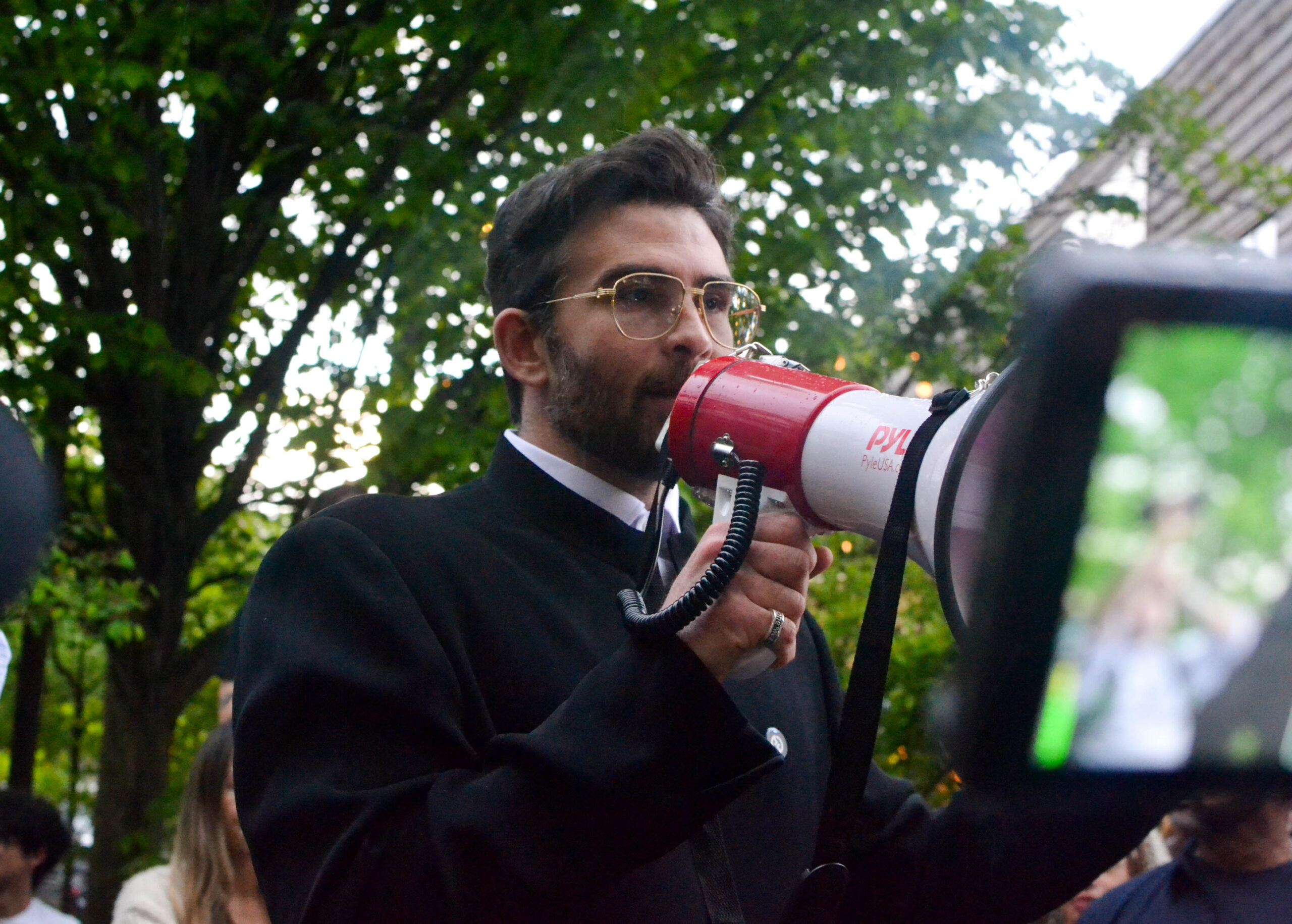
Featured image: Hasan Piker speaks at a Chris Rabb campaign rally in Philadelphia on April 30, 2026. File photo. Photo: Morgan.rice.bassline.design (CC BY 4.0).
Before an October 26 political conversation in Minneapolis, Hasan Piker drove around the University of Minnesota campus offering students rides to vote early, MPR News reported. The trip gave a concrete example of the political participation he describes wanting from his audience.
In an interview EFE published November 3, the leftist streamer said he tries to develop viewers’ class consciousness and mobilize his community around causes its members care about.
The conversation was recorded October 30, according to EFE’s video captions. The election-day publication offers Piker’s account of what he hopes his hours of news commentary accomplish beyond the stream.
Piker described viewers frustrated that the future they expected has not matched the lives available to them. He connected his politics to universal healthcare and affordable housing, arguing that provisions familiar elsewhere are treated as radical demands in the United States.
These are his descriptions of his audience and his aims. They put the emphasis on what people can do together, alongside the arguments and reactions that make up his broadcasts.
The Minneapolis visit brought that work into a room with elected officials. Piker appeared with U.S. Rep. Ilhan Omar and Minnesota state Sen. Omar Fateh at Theatre in the Round, a 245-seat venue in Cedar-Riverside.
Fateh hosted the conversation, called “I’m the Host Now!” Local group Baddies 4 Progress and communications firm Haus of C organized the event, according to MPR.
The appearance also drew criticism from Democratic figures including U.S. Sen. Amy Klobuchar and Minneapolis Mayor Jacob Frey over Piker’s past statements. MPR interviewed attendees who wanted Democrats to move further left, including one man who said he had only recently become politically involved.
An audience watching the same broadcast can share an argument without sharing a political commitment. Offering a ride to vote asks for a different kind of participation, with a destination and an action at the end of it.
Neither the interview nor that visit establishes how many votes Piker changed. They do identify the work behind his account of organizing: explaining a political position, appearing with its advocates and helping people reach a place where they can act on it.


Be First to Comment