
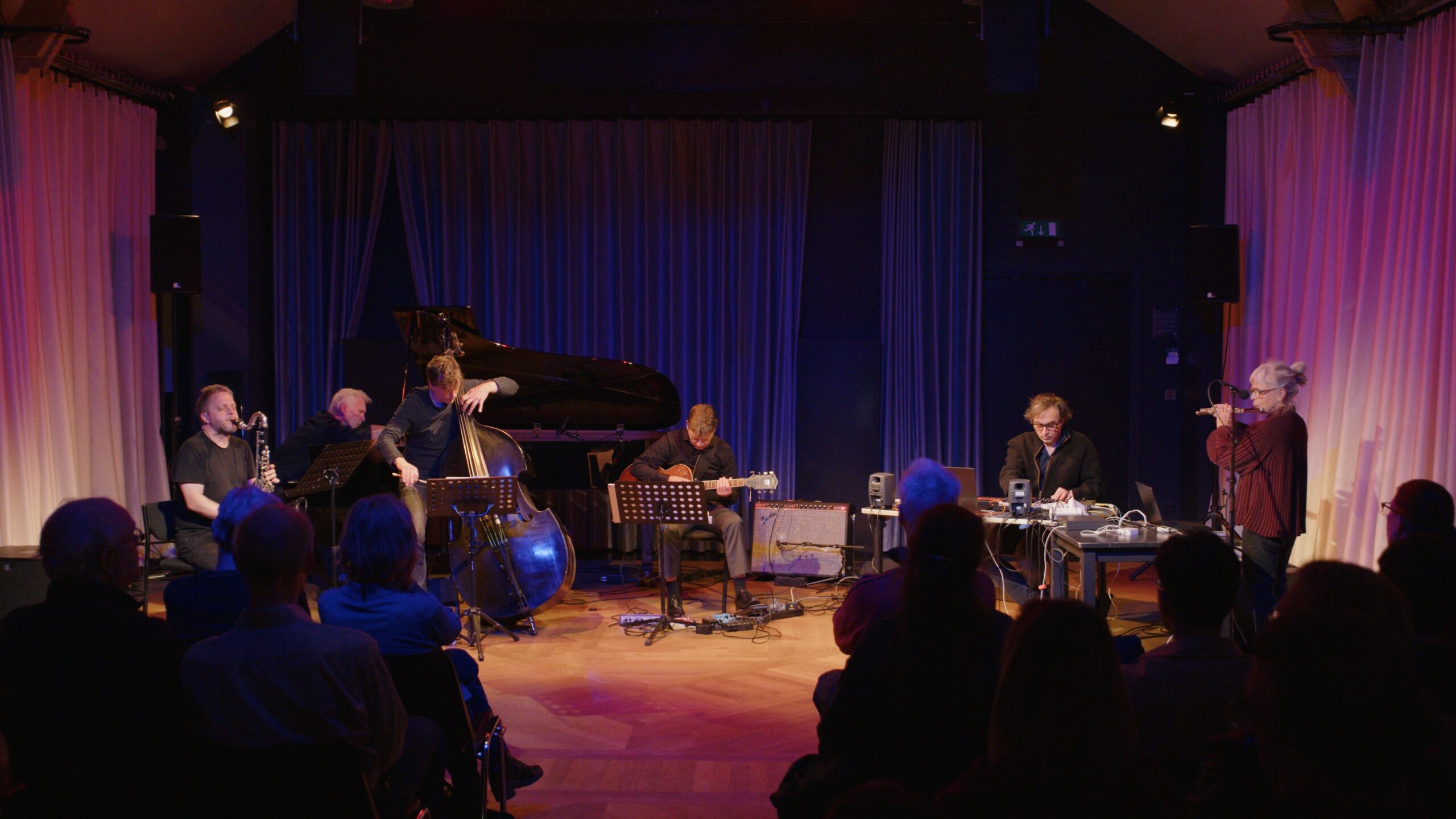
MAZE in performance.
“One moment was when one player entered alone, very softly with material that had been played in the previous section before the silence and we could all continue to develop that musical material,” Anne La Berge wrote in an email interview about Pause Then.
In La Berge's piece for MAZE, a Max patch helps decide when the musicians play and pause. Its decisions about silence are negotiable with the players.
La Berge described another decision made by the software: “The Max patch also decides randomly which of 21 reverbs we will be put through each time we start to play again.”
“The decisions in advance were to follow the instructions which appeared on our devices and to pay attention to the characteristics of each reverb and play material that suited it.”
“The other decisions were to use musical material more than once to give the performance an interesting structure, to relate our material to the overall shape and develop one another’s musical material over time.”
In rehearsal, the group tried different lengths for the playing and pausing sections before arriving at the performance version.
La Berge explained why those durations needed work: “This was crucial for the ensemble since we are practiced at playing together and the extended silences with varying reverb tails were a new addition to our sonic repertoire.”
Recalling that quiet solo entrance, La Berge wrote: “Since we enjoyed this moment in performance so much, the group focussed even more on making continuity and surprises clear and musically interesting.”

Be First to Comment