
A screen name can keep your name off a political post. It doesn’t remove the account records behind it, and those records are at the center of a newly public lawsuit over federal efforts to identify anonymous critics of immigration enforcement.
Four users of Bluesky, Instagram and X are asking a federal court in Washington to stop an investigation they say turns criticism of the Trump administration into a reason to demand identifying information. Their allegations haven’t been decided, and the injunction they want hasn’t been granted.
The ACLU says the proposed class action was filed November 16, initially under seal. The court ordered it unsealed November 25; redacted versions of the complaint and injunction motion became public November 27.
What the account records can reveal
The complaint describes demands for subscriber names, addresses, registration IP addresses, payment information and other records. An account’s public posts can omit a person’s name while the information requested from the company connects that handle to an identifiable person.
According to the complaint, at least 35 grand jury subpoenas have been issued under an investigation the plaintiffs call Investigation 18. The lawyers allege that some companies have already disclosed anonymous users’ information, and that some demands direct companies to send records to immigration investigators.
The four people bringing the case appear under pseudonyms. Their lawyers argue that the investigation violates the First and Fourth Amendments because it was initiated to gather information on dissenters and retaliate against protected political speech.
The request goes beyond four accounts
In their preliminary-injunction motion, the plaintiffs ask the judge to halt the investigation and provisionally certify a class covering people whose identity or subscriber information has been or will be requested through it.
The motion describes a shift from DHS administrative subpoenas, some withdrawn after challenges, to grand jury subpoenas seeking similar information. The lawyers argue that secrecy and the difficulty of learning about those demands make separate challenges an inadequate answer to the alleged pattern.
Their account of the harm includes what people stop saying once they learn an investigator wants their information. The motion describes self-censorship and fear of visits by federal agents, presenting those effects as reasons for immediate court protection rather than waiting for the case’s final resolution.
A decision is still ahead
The complaint lists December 11 disclosure dates for the two Bluesky accounts. Those are dates described in the filings, not a general deadline for social media users.
The Associated Press reported November 27 that the government’s written response is due December 14 and a hearing is set for January 6. AP said DHS and U.S. Attorney Jeanine Pirro’s office did not immediately respond to its requests for comment.
The practical issue is who gets to connect a political post to the person behind it, and what the government must establish before obtaining that connection. The plaintiffs want a judge to intervene before more records change hands. Their request is now public; the court’s answer is still ahead.
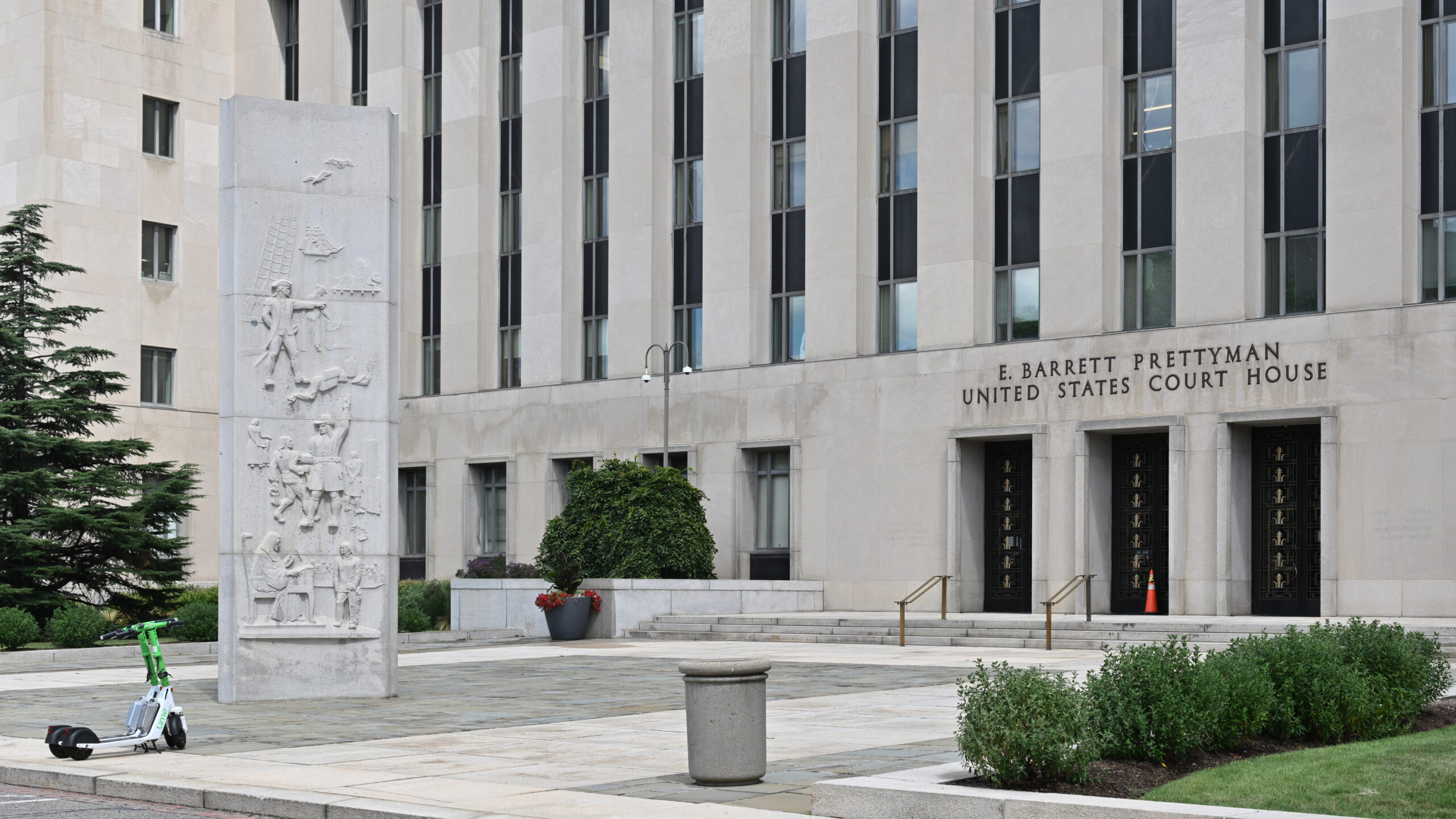
The E. Barrett Prettyman United States Courthouse in Washington, D.C., photographed July 31, 2026. Archive photograph. Photo: G. Edward Johnson / Wikimedia Commons, CC BY 4.0. Copyright 2026, G. Edward Johnson. Displayed at reduced size.


Be First to Comment