
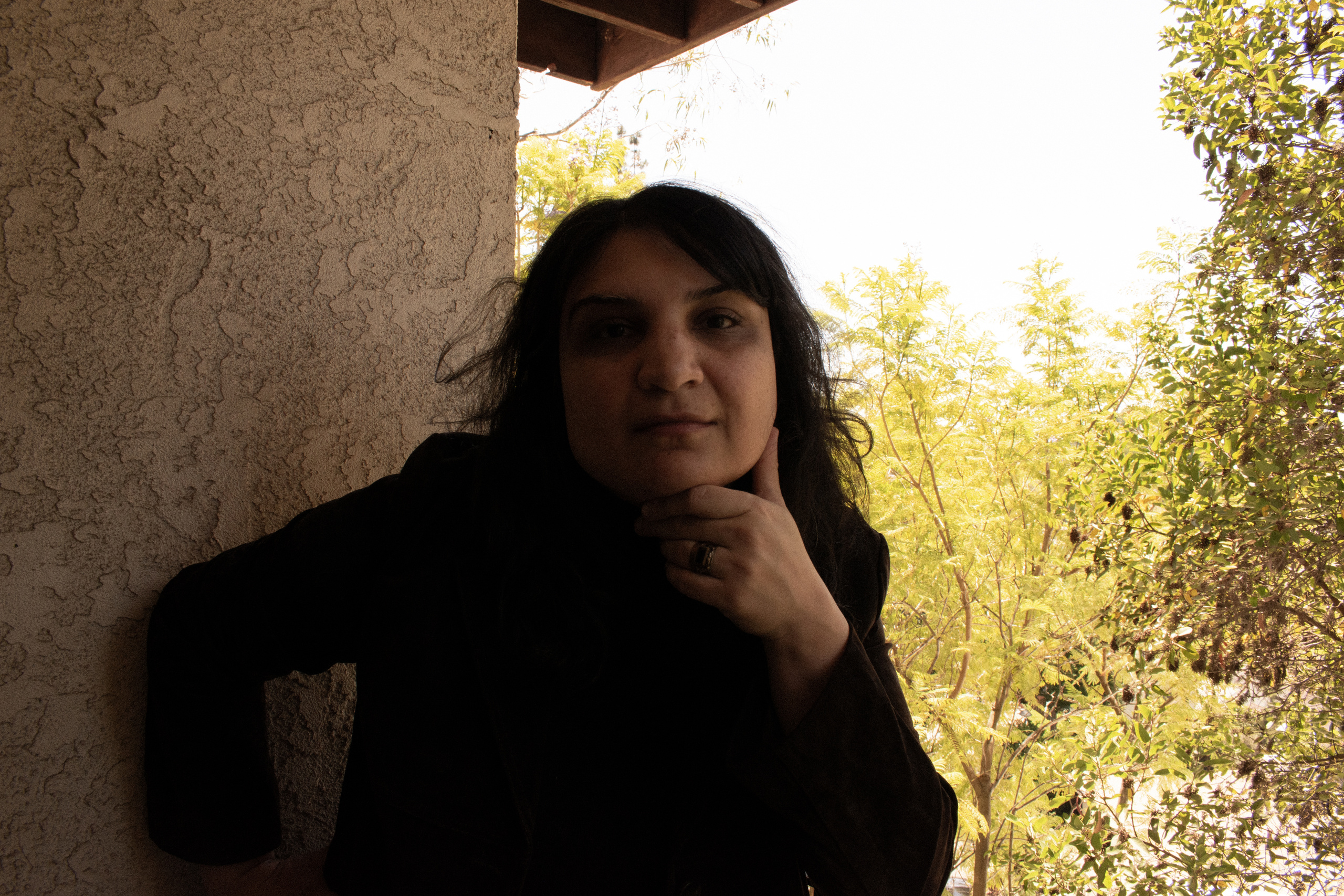
Sarah Davachi. Photo: Sean McCann.
In her compositions, a shared line can reveal different harmonics as players find their own pace.
Two musicians can read the same material and still leave room between their sounds. For composer Sarah Davachi, that shifting relationship gives a piece somewhere to go even while its players appear to be holding together.
In an email interview, Davachi pointed to “The Rose Dialogues,” from The Will of Tongues, and “Three Unisons for Four Voices,” composed for and performed by NO HAY BANDA and included in Book of Carols. Both let musicians work through shared material at their own pace.
“So there is a sense of unison, but it is constantly slipping in and out of phase with itself, which allows for the tunings in each case to highlight their inherent harmonic structures in a way that is also changing from performance to performance,” she wrote.
The unison gives listeners a relationship they can keep hearing change. “I also think that there’s something really beautiful about unisons, particularly the way in which they’re never precise and therefore always creating some kind of dissonance and richness in the sound, so I work with those a lot also as another way of expressing microtonality.”
The tuning systems give those movements different material. Davachi described “The Rose Dialogues” as written in meantone temperament, moving through states of unison and harmony; “Three Unisons for Four Voices” uses just intonation and three movements, each exploring particular harmonic relationships as the players’ unisons separate.
Hearing the ensemble play “Three Unisons for Four Voices” changed how much time she gave that process. “In the end, I lengthened each of the movements by several minutes,” she wrote.
“With this piece, because the players are kind of moving at their own time and listening while navigating the changing of harmonic relationships, the pacing becomes a bit more intuitive.” Listening becomes part of deciding the piece’s duration, rather than just checking a duration already fixed on paper.
Davachi also described writing for a room that would shape what people heard. “Long Dance Vale,” another piece on Book of Carols, was commissioned by The Broad in Los Angeles for its entrance space and uses live electronics and two trombones.
“The acoustics in it are very particular, similar to that of a church,” she wrote. “So that piece was composed specifically for that room and its shape and acoustics.”
The trombonists move slowly through the room. In the final section, their position puts the direction of the sound into motion as well.
“The two trombones are slowly moving around the room throughout the piece, and in the final part of the piece they are standing in the centre of the room, in the centre of the audience, and slowly moving in a small circle with their bells facing outward, kind of like the rotating horns of a Leslie speaker.”
The trombonists make a small circle within the audience, turning their bells outward as they move. A sound can continue, and where it reaches the listener from can keep changing.

Be First to Comment